
Most home-service businesses don't lose inquiries because their website is ugly. They lose them in the gap between first contact and a booked estimate. Research from MIT Lead Response Management studies reveals that contacting a prospect within 5 minutes increases qualification odds by 21x compared to waiting 30 minutes. This checklist walks through that gap, one step at a time, so you can inspect your own process honestly.
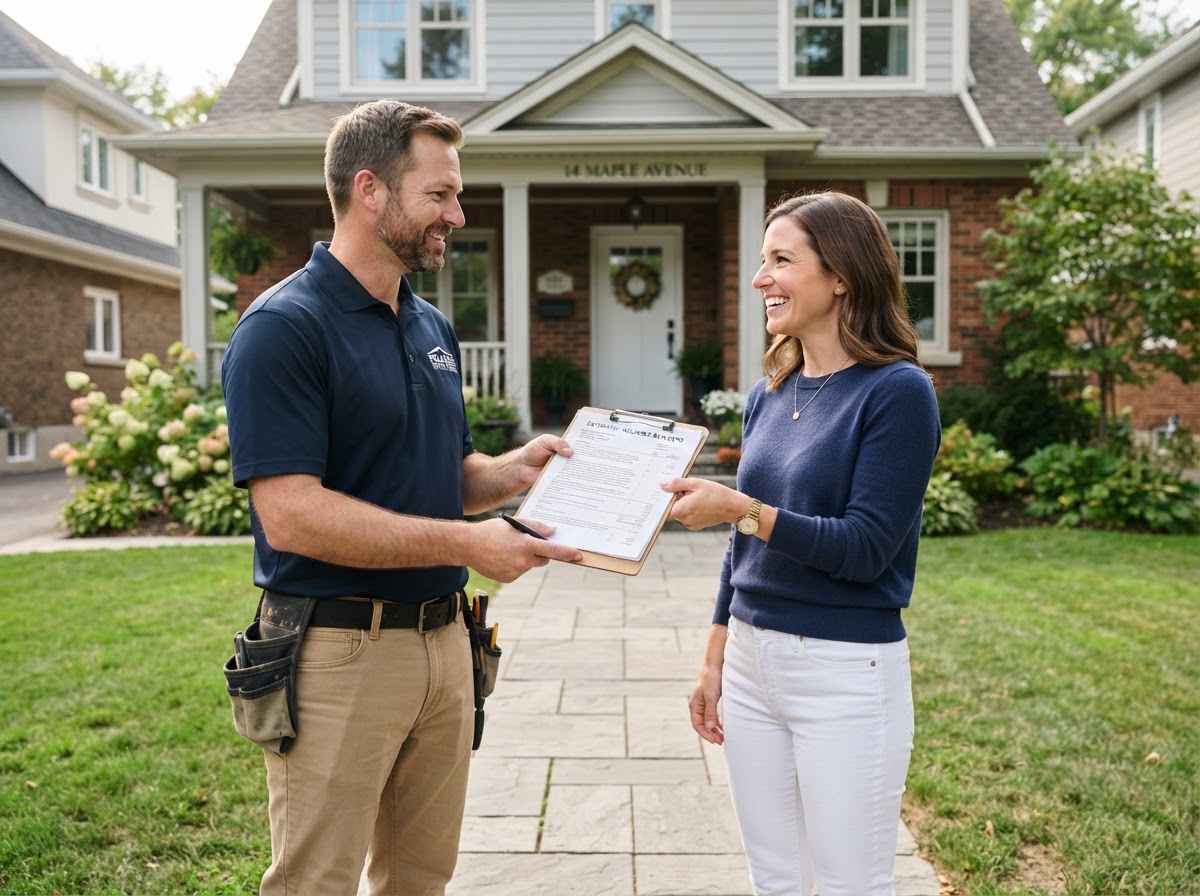
Fast response times directly increase booked estimate conversions for local contractors.
Note: Ladd Growth is currently selecting three Tulsa roofing companies for a founding case study with no service fee. See if you qualify.
When a call comes in
Ask yourself:
- Does someone answer, or does it go to voicemail?
- If it goes to voicemail, how fast does someone call back?
- Is there anything that prompts a callback automatically, or does it depend on someone checking the phone?
- After hours, what happens? Is there a path other than "leave a message"?
A missed call is not a failure by itself. The question is what happens next. If nothing prompts a callback, the homeowner often moves to the next contractor on the list within minutes.
When a form comes in
- Where does the form go—an inbox, a single phone, a shared folder?
- Does the homeowner receive any confirmation that a person saw it?
- How long before someone reads it and responds?
- Is there a clear owner, or does everyone assume someone else will handle it?
A form that lands in a shared inbox with no notification is one of the most common places an inquiry disappears. The homeowner submitted it, expects a response, and gets silence.
Who owns the inquiry
For every inquiry, there should be a clear answer to "who is handling this?" If the answer is "everyone" or "whoever sees it first," that's worth checking. Ownership doesn't require a complex system. It can be a single person who is notified, or a visible list where each inquiry has a name next to it.
How fast is the response
Response time matters because homeowners often contact several contractors at once. The first one to respond meaningfully usually wins the estimate. "Meaningfully" means a person acknowledges the inquiry and moves it toward a scheduled estimate—not an auto-reply that says "we'll get back to you."
Does the estimate get booked
- When an estimate is agreed to, does it go on a calendar?
- Does the homeowner get a confirmation with date, time, and what to expect?
- Or does the estimate live in someone's memory until the day arrives?
Does a reminder go out
A reminder before the appointment reduces no-shows and confirms the homeowner is still interested. If no reminder goes out, the appointment depends entirely on the homeowner remembering—which is unreliable, especially for estimates scheduled days in advance.
What happens after the estimate
- Is there a defined follow-up sequence, or does the estimate get given and then nothing?
- Does anyone check in if the homeowner goes quiet?
- How many touches happen before the lead is considered closed?
Can you see the outcome
For each inquiry, can you tell whether it became a booked job, was lost, or is still open? If the answer requires digging through texts, emails, and memory, the outcome isn't visible. Without visible outcomes, it's hard to know which parts of the process are working and which aren't.
How to use this checklist
Walk through each section and answer honestly. Where you can't answer, that itself is information—it means that part of the process isn't visible. You don't need to fix everything at once. The most useful first step is to identify the single point where inquiries are most likely to disappear, and address that one first.
This checklist describes common patterns, not your business specifically. The only way to know whether a meaningful gap exists is to inspect your own process. That's what a fit review can help determine.